Showing posts with label French. Show all posts

Wednesday, 7 August 2024

French block-printed, hand coloured endpapers


Above:A block-printed paper made by Les Associés in Paris 1724?


Above: ‘Chez Les Associe’, Paris, 1790. Block printed calico paper.


Block-printed paper emerged from traditions of textile printing. The earliest block-printed papers date from the end of the 16th century, but mostly one finds them from the 18th–early 19th century. The print was hand printed, using carved wooden blocks, each individual colour was printed separately and left to dry before applying the next, or a black-and-white design was hand tinted. The French papier dominoté is a good example of the type, however similar printed papers were produced all over Europe.  


Above: Modern reproduction of 'Les Associés' print of mid 18th century Domino paper


Above: Modern reproduction of 'Les Associés' print of mid 18th century Domino paper 'Guirlandes et Festons'.


Above: Modern reproduction of 'Les Associés' print of mid 18th century Domino paper ' Oiseau et Rose'. Below: The original front endpaper 1768 


Above: Unknown 1800 French.


Above:  Almanach Historique et Géographique de la Picardie. Année 1759. [1758?]

The 'Endpaper Challenge is by Monty Lee.  You can participate in from September 2nd - 8th on Instagram.

Tuesday, 13 December 2022

Regnier Kuhn


Elegant illustrations in red by Regnier Kuhn (1873-1940), from 'Georgie au Jardin Public' by Henriette Perrin-Duportal in 1929. Regnier Kuhn's work was inspired by classical Greek works but also are very much part of their time and Art Deco.


Thursday, 21 April 2022

Plumapi


I'm still feeling Eastery after a full four day weekend of kids workshops, so here is a delicate funny illustration by Plumapi

Wednesday, 29 July 2020

Sylvie Bello I


Swings, I love to swing and here all of the swings have been removed. So I will have to swing in my imagination, helped by Sylvie Bello's wonderful drawing. 

Thursday, 7 November 2019

Monday, 8 April 2019

Christina Roussey


"In my backyard, I have a tall friend. He's so big, his head is in the clouds, and he has birds in his hair." 

'My Tree and Me', written by Jo Witek and illustrated by Christine Roussey, which guides and introduces children to the seasons and was published last week by Abrams.

It is a visually exciting, wonderfully colourful and charming book illustrated in Christina's minimalist graphic style which used blocks of colour and line.

Saturday, 16 March 2019

Benjamin Gibeaux


A wonderful short film written and designed largely by Benjamin Gibeaux's daughters.  #YouthForClimate  #ClimateStrike


Friday, 4 January 2019

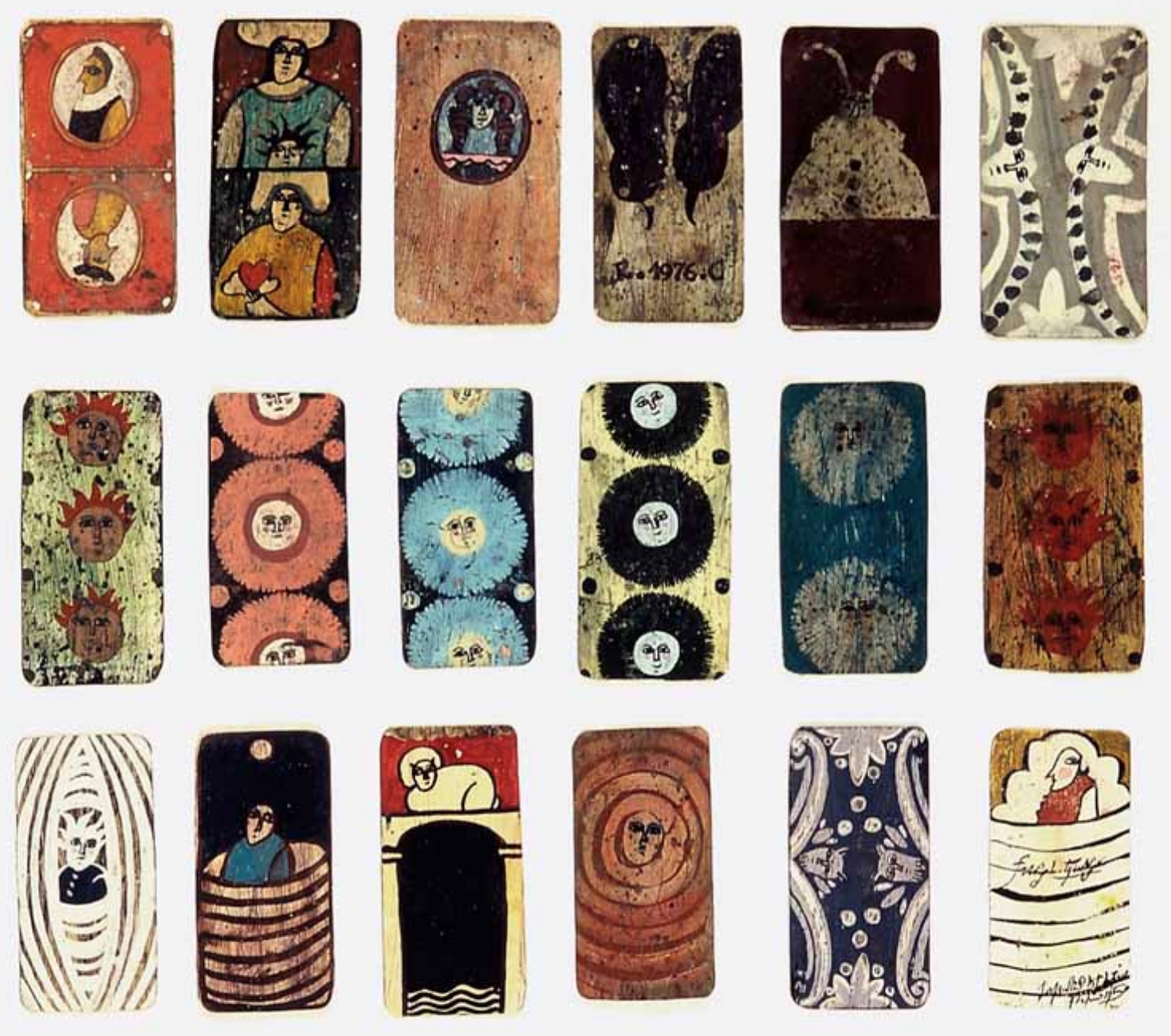
Robert Coutelas II


In 1967, using cardboard and wood that he found on the streets, Robert Coutelas (1930-1985) began his “Cartes” a series of playing-card-sized paintings with rounded corners The cards, like tarot cards were covered in mystical, symbolic designs. Though he courted commercial success by exhibiting and entering competitions he always abandoned it.


In 1973 Robert won a contest run by the playing-card maker Grimaud but he refused to have his works marketed by them, a gallery offered to sell them if he created larger versions and Andre Malraux, former French Minister of Cultural Affairs, showed interest in 1975, Coutelas was told to write to him, he didn’t.


Wednesday, 2 January 2019

Robert Coutelas I


Where has Robert Coutelas (1930-1985) been hiding from me? I adore these strange portraits, they make me guess at the lives lived by these strange characters.

Robert was born into a poor French family who lived in a single room. He left school aged 11 to work in a spinning factory in Theirs, Auvergne. Robert became fascinated by “arts populaires” artworks by unknown craftspeople and began amassing a small collection of works using his pocket money. However, his parents wanted to thwart his artistic aspirations and threw his treasured collection away. Robert attended an industrial design programme and art college at Ecole Nationale Superieure des Beaux-Arts de Lyon but did not complete either course. In 1955 he exhibited with the new Lyon School of painting, a group who straddled figurative and abstract work. He moved to Paris in 1958 and was celebrated and supported by a number of galleries, but he always broke away and mostly lived in abject poverty.


"Painting is one of my passions, an inner adventure.Every time I sell one of my paintings in order to survive, I feel like I’m betraying it." Robert Coutelas


Wednesday, 29 August 2018

Mirka Mora


Mirka Mora (1928-1918) Melbourne based artist, born in France, has died aged 90. 

Mirka was born in Paris on March 18, 1928 to a Lithuanian father, Leon Zelik, and a Romanian mother, Celia GelbeinIn France Mirka attended theatre school with Marcel Marceau. Amazingly the two were reunited in 2003 when Marcel Marceau delivered to Mirka the honour of 'Officier des Arts et des Lettres'.


The second world war engulfed Mirka and her family, they were placed in a concentration camp but miraculously she escaped Auschwitz.   
                                                          Above: Georges Mora 

In 1947 Mirka married Georges Mora (June 26, 1913 – June 7, 1992) a German Jew born in Leipzig.  Georges was a medical student Georges who fled Germany for Paris in 1930. However when the Spanish Civil War broke out, Georges left Paris to join the cause, after a plane crash he was a prisoner of war for a time, before joining the French resistance. 


Their first son Phillippe was born in 1949 and together they emigrated first to New York and then onto Melbourne, Australia in 1951.  William Mora was born in 1953 and Tiriel Mora was born in 1958.

In Melbourne this young family found a vibrant, accepting society full of optimism and opportunity, Georges at first became manager of a flatbread factory before opening a café in 1954; 'The Mirka Café' quickly became three cafés, and then came the Balzac Restaurant. The hospitality and warmth of this young couple, meant they became key to Melbourne's bohemian subculture. Georges also became an influential art dealer and in 1967 he founded the Tolarno Galleries, the first commercial art gallery in Melbourne. Meanwhile Mirka's career as an artist thrived, she was commissioned to create many murals whilst enjoying her own path as an artist creating soft sculptural dolls and paintings.

                     Above: Charcoal drawing (1963) Below: Reflections on Love 


Mirka's art was not confined to one genre, scale or medium, she fluidly moved between murals, sculpture, painting, textiles and mosaic. The common thread was colour, exuberance and love with an iconography gained from a love of classical mythology. 


In 1999-2000 there was a retrospective of her work at Heide Museum of Art, celebrating 50 years of creative output. She had over 35 solo shows during her lifetime and only two years ago her work was translated into dress fabric by German fashion brand Gorman. Her mural at St Kilda's Tolarno Hotel has heritage status as do many other of her public works in Melbourne.


Below: 'Chatter In The Garden' 2011

                         Above: 'Cat with Friends' 2014.

“I think everything is funny. It’s so funny that we have to die. It’s cruel, but it’s terribly funny. You have all these dreams and you’ve got to leave everything. In my grave I’ll take some brushes and some paint. You never know!” - Mirka Mora